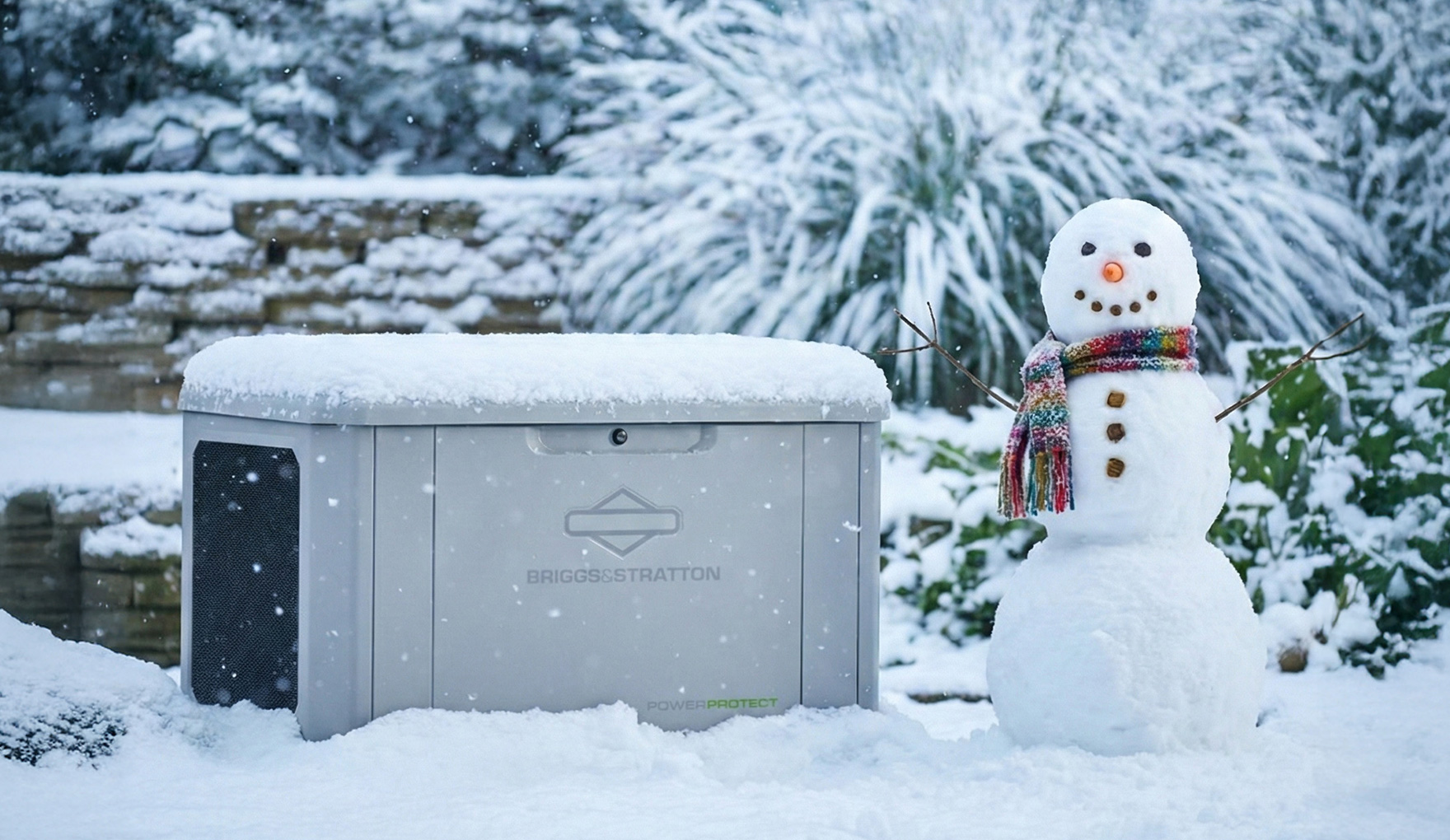
When a winter storm is on the horizon, two concerns rise fast: Will we lose power? and Is our generator ready?
Good news—you can turn those worries into confidence with a bit of proactive prep.
With the National Weather Service forecasting colder-than-average temperatures and above-average snowfall for areas like the Northern Plains and Great Lakes this winter, staying ahead of the season is more important than ever.
If you own a home standby generator, a few smart steps now can make all the difference later—keeping your home warm, your pipes safe, and your power seamless during the toughest conditions.
1. Before the Snow Falls: Your Must-Do Prep
Winter readiness starts long before the first flakes hit the ground. Focus on giving your generator the best environment to operate safely and efficiently.
Keep Clearance Clear (The 3-Foot Rule)
Your generator needs at least three feet of open space on all sides to breathe and exhaust properly. As snow builds up, keep the area clear of drifts, leaves, and ice. Proper airflow = reliable performance.
Consider Elevation & Wind Protection
Live in an area with heavy accumulation? A raised platform helps keep the unit above drifting snow. For regions with harsh winds, adding a windbreak at a safe distance can protect the enclosure without limiting airflow.
Fuel System Check (LP & Natural Gas)
Natural Gas: Typically winter-tough, but in regions less familiar with deep freezes, moisture in the gas stream can cause unexpected issues.
Liquid Propane (LP): LP needs pressure to vaporize correctly. In extreme cold, that pressure can drop, which makes powering larger loads difficult. If you’re on LP, schedule a fuel delivery before the storm. It’s one less thing to worry about—and it helps avoid emergency delivery costs.
Inspect the Mechanicals
A quick visual check goes a long way. Look for loose connections, fuel or oil leaks, and make sure your battery is charged with clean terminals.
Follow Winter Readiness Guidance
NERC recommends generator owners complete winter checklists, deploy weatherization measures in advance, and monitor ongoing cold-weather mitigations. Being proactive can help reduce the risk of outages during extreme demand events.
2. During the Storm: Maintain Access & Airflow
Once snow starts piling up, your focus shifts to keeping the unit clear so it can do its job.
Airflow Matters
Check the air intake and exhaust regularly—and clear away snow, ice, or packed slush. Blockages can lead to performance issues or cause the generator to shut down for safety.
Carefully Remove Ice
Ice storms can sneak up quickly. Gently remove ice from vents and ensure the air filter stays clean and dry. Often, clearing the intake and exhaust is all that’s needed to get a generator operating smoothly.
Cold Weather & Battery Health
Batteries lose efficiency in freezing temperatures. If your area regularly dips below 32°F, a battery warmer is an inexpensive upgrade that ensures reliable starts when the weather is at its worst.

3. Tools & Tech That Make Winter Easier
Smart technology can take the guesswork—and the freezing walk outside—out of monitoring your generator.
Remote Monitoring with EnergyTrak™
EnergyTrak lets you keep eyes on your generator and backup power system from anywhere. Get real-time insights, alerts, and performance updates without stepping out into the storm. It’s peace of mind, delivered straight to your phone.

Stay Warm, Stay Safe, Stay Powered
A little preparation goes a long way in keeping your home comfortable and protected during severe winter weather. With a clear space, a checked-in fuel system, and a few smart upgrades, your generator will be ready when the storm hits.
Want help getting winter-ready?
Connect with an authorized service dealer in your area today.
Request a FREE Consultation
Complete a short contact form to receive a no-obligation estimate.