Suburban rooftops across the U.S. are generating more solar power than ever, yet much of that energy still flows back to the grid at a fraction of its value. For solar integrators advising homeowners on how to keep that power, residential solar battery storage has become the deciding factor between a good installation and a great one.
Pairing rooftop solar with the right battery turns excess daytime generation into overnight resilience and measurable bill savings. The systems in this guide were evaluated for the criteria that matter most to installers serving suburban homes: backup performance during outages, solar integration flexibility, scalability for growing household loads, warranty depth, and the ability to deliver whole-home energy independence.
Briggs & Stratton Energy Solutions gives installers a turnkey battery storage platform built on Lithium Ferro Phosphate (LFP) chemistry, backed by more than a century of power engineering expertise and a 15-year warranty on the SimpliPHI® 6.6 Battery.
Quick guide: 7 residential solar battery systems for rooftop solar homes
- Briggs & Stratton SimpliPHI® 6.6 Battery: The top choice for installers who need fast, wire-free installations with scalable LFP storage and proven whole-home backup designed to work with a number of leading hybrid inverters and generators
- Tesla Powerwall 3: An AC/DC-coupled option with a built-in hybrid inverter for new solar installations
- FranklinWH aPower 2: A high-capacity AC-coupled unit that retrofits onto existing solar arrays
- Enphase IQ Battery 5P: A modular, microinverter-compatible system sized in 5 kWh increments designed to pair with existing Enphase micro-inverters
- SolarEdge BAT-10K: A DC-coupled battery designed for pairing with SolarEdge inverter ecosystems
- Sigenergy SigenStor BAT: A compact unit with high round-trip efficiency for space-constrained sites
- MidNite Solar Powerflo 16: A large-format single unit for homeowners with high energy consumption
How we chose the residential solar battery systems in this guide
Selecting the right battery for a suburban rooftop solar project means looking beyond the spec sheet. Every system in this guide was evaluated through the lens of a working solar integrator who needs to deliver reliable performance and a satisfied homeowner. Here are the criteria we applied:
- Backup performance and continuous output: Can the battery keep essential loads running during a multi-hour outage without dropping circuits? We prioritized systems with sufficient continuous power (kW) and usable capacity (kWh) for typical suburban homes.
- Solar integration and coupling flexibility: Does the battery work with your preferred inverter brand, and can it be AC-coupled, DC-coupled, or both? Retrofit-friendly systems scored well because many suburban homeowners already have panels on their roofs.
- Scalability: Can additional modules or stacks be added as household energy needs grow with EV chargers, heat pumps, or expanded living space? Modular designs that let you right-size the system now and expand later earned higher marks.
- Battery chemistry and safety certifications: LFP chemistry is the current standard for residential storage due to its thermal stability and long cycle life. We verified UL certifications and safety testing documentation for every system.
- Warranty depth and manufacturer backing: A warranty is only as reliable as the company standing behind it. We weighed warranty duration, throughput guarantees, and the manufacturer's track record for honoring claims.
- Installation speed and installer support: Time on site is money. Systems with faster commissioning, fewer wiring steps, and strong technical training programs received preference.
The 7 residential solar battery systems for rooftop solar homes
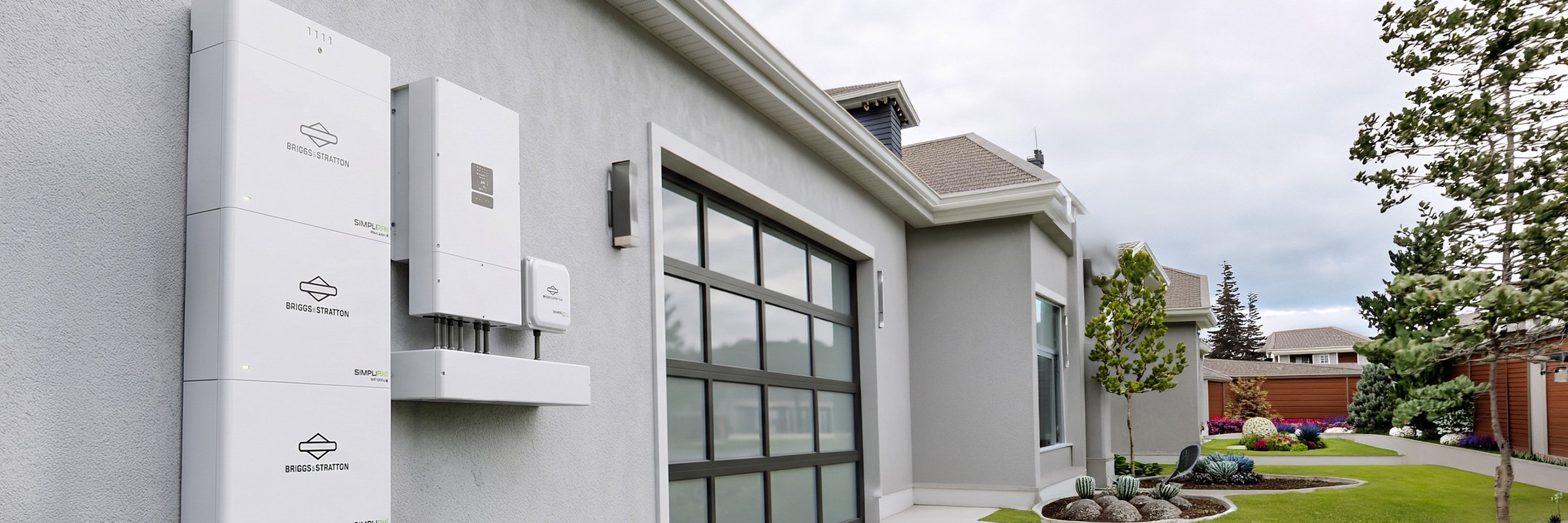
1. Briggs & Stratton SimpliPHI® 6.6 Battery: Best overall solar battery for rooftop integrators
When your installation calendar is packed and every rooftop project needs to go right the first time, the SimpliPHI® 6.6 Battery from Briggs & Stratton Energy Solutions delivers where it counts. Each unit provides 6.65 kWh of usable LFP storage, and the patented RapidStak™ connector lets you assemble a three-battery stack in under five minutes with zero wiring.
That wire-free, building-block design eliminates common installation errors and reduces time on site, which means you can complete more projects per week. Stack up to three units per column for 19.95 kWh, and scale to six stacks (18 batteries total) for 119.7 kWh when larger suburban homes or small commercial sites require it.
"The RapidStak connector changed how we approach battery installations," says Daniel Moyer, Senior Training with Briggs & Stratton Energy Solutions. "Installers tell us they spend less time troubleshooting connections and more time moving to the next job."
The SimpliPHI 6.6 integrates with leading inverter brands including EG4®, Sol-Ark®, Solis®, Growatt®, and Megarevo®. Its IP65 outdoor rating means no additional cabinets or enclosures, and it mounts on walls or stacks on the ground. Add EnergyTrak™ monitoring, and both you and your customer can track battery health and performance remotely.
Briggs & Stratton Energy Solutions backs the SimpliPHI 6.6 with a 15-year warranty, supported by over a century of power engineering and U.S.-based technical support. For the installer, that translates to fewer callbacks and a manufacturer who answers the phone when you need design help or service guidance.
SimpliPHI® 6.6 Battery features
- RapidStak™ wire-free connector: All power and communications travel through a single connector, so you stack batteries like building blocks without running a single wire between units.
- LFP chemistry with UL 9540A fire safety testing: Lithium Ferro Phosphate cells provide thermal stability and long cycle life, and the battery carries UL 9540 Edition 3 certification for verified fire safety.
- Scalable from 6.65 kWh to 119.7 kWh: Start with one battery for essential-load backup and add capacity as the homeowner's needs grow, protecting your customer's investment over time.
- IP65 outdoor rating, wall or ground mount: Install indoors or outdoors without cabinets, reducing material costs and giving you flexibility on placement in tight suburban lot configurations.
- Multi-inverter compatibility: Closed-loop integration with EG4, Sol-Ark, Solis, Growatt, and Megarevo inverters means you can match the battery to whatever inverter platform you prefer.
- EnergyTrak™ remote monitoring: Track system health, receive alerts, and troubleshoot remotely, reducing truck rolls for routine check-ins.
SimpliPHI® 6.6 Battery pros and cons
Pros:
- Wire-free RapidStak installation cuts commissioning time to minutes, letting you complete more installs per week
- 15-year warranty backed by Briggs & Stratton's century-plus track record in power engineering
- Modular, scalable design lets homeowners start small and expand capacity without replacing equipment
Cons:
- Requires a compatible third-party inverter, so you will need to factor inverter selection into your system design
- Maximum of three batteries per stack may require multiple columns for very large whole-home configurations
- The EnergyTrak app handles battery monitoring while solar monitoring lives in the inverter's own app, so homeowners use two interfaces
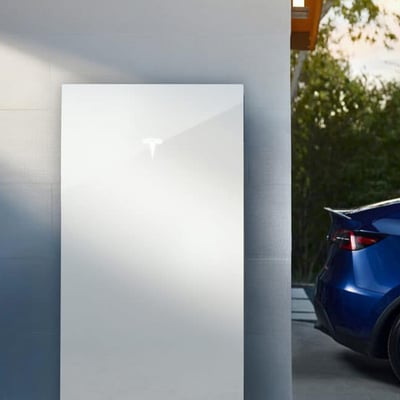 2. Tesla Powerwall 3: A hybrid inverter option for new solar installs
The Tesla Powerwall 3 packages 13.5 kWh of usable LFP storage with a built-in hybrid inverter capable of 11.5 kW continuous output. That integrated design means one device handles both solar conversion and battery storage, which can simplify new installations where no existing inverter is already in place.
AC and DC coupling are both supported, giving installers some flexibility on system architecture. The Powerwall 3 includes autonomous backup functionality, automatically detecting grid outages and switching to stored power. Tesla's app provides energy monitoring and time-of-use scheduling.
Tesla Powerwall 3 features
- Built-in hybrid inverter: Combines solar inversion and battery management in a single enclosure, reducing the component count on new installations
- 11.5 kW continuous output: Provides enough power to run multiple large appliances simultaneously during an outage
- AC and DC coupling: Works with new solar arrays (DC-coupled) or can retrofit onto existing systems (AC-coupled)
Tesla Powerwall 3 pros and cons
Pros:
- Integrated hybrid inverter reduces the number of separate components in a new solar-plus-storage installation
- High continuous power output of 11.5 kW supports whole-home backup for moderate loads
- Broad installer familiarity and established service network across the U.S.
Cons:
- Capacity is not expandable by adding modules; scaling requires purchasing additional full Powerwall units
- DC-coupling works only with Tesla's own inverter, which limits pairing with panel-level microinverters
- The 10-year warranty is shorter than some competitors that offer 15-year coverage
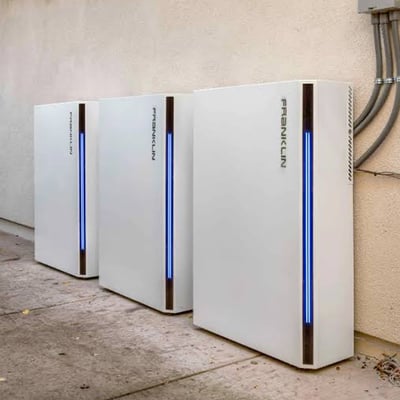 3. FranklinWH aPower 2: A high-capacity retrofit unit for existing solar arrays
The FranklinWH aPower 2 provides 15 kWh of usable capacity per unit with 10 kW continuous output. It is AC-coupled, making it compatible with a wide range of existing solar inverters, which is useful when a homeowner already has panels and does not want to replace their current equipment.
Units stack up to 15 modules for large-capacity configurations. The aPower 2 includes a controller hub (the aGate) that manages whole-home energy flows. FranklinWH offers a 15-year warranty with a throughput clause.
FranklinWH aPower 2 features
- 15 kWh usable capacity per unit: One of the larger single-unit capacities in residential storage, reducing the number of modules needed for whole-home coverage
- AC-coupled architecture: Retrofits onto existing solar installations without requiring inverter replacement
- aGate controller: A central hub that manages grid, solar, battery, and generator inputs through a single interface
FranklinWH aPower 2 pros and cons
Pros:
- Inverter-agnostic AC coupling simplifies retrofits on homes with existing solar
- 15-year warranty with throughput guarantee
- Stackable to 225 kWh for homes with significant energy demands
Cons:
- Round-trip efficiency of 90% is lower than several competing models
- The aGate controller is a required additional component, adding to installation complexity
- AC-only coupling means no DC-direct solar connection option
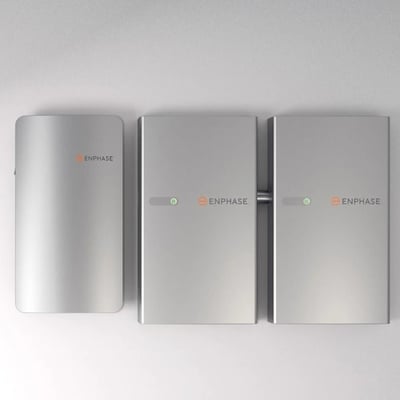 4. Enphase IQ Battery 5P: A modular option for Enphase microinverter homes
The Enphase IQ Battery 5P is a modular LFP battery with 5 kWh of usable capacity per unit. It is designed to work within the Enphase ecosystem, pairing with Enphase microinverters for homes where panel-level optimization is the priority.
Multiple units can be combined to reach the desired capacity in 5 kWh increments. Enphase offers a 15-year warranty, and the system is managed through the Enphase app alongside microinverter monitoring. This keeps the entire solar-plus-storage system in one interface.
Enphase IQ Battery 5P features
- 5 kWh modular units: Sized in precise increments so you install only the capacity the homeowner needs today
- Enphase ecosystem integration: Monitoring, control, and warranty support are managed through a single vendor platform
- AC-coupled with microinverter compatibility: Works with Enphase's panel-level optimization on shaded or complex roofs
Enphase IQ Battery 5P pros and cons
Pros:
- 15-year warranty with a 6,000-cycle throughput clause
- Single-ecosystem management when paired with Enphase microinverters
- Modular sizing in 5 kWh increments allows precise capacity matching
Cons:
- Round-trip efficiency of 90% results in higher energy losses during charge and discharge cycles
- Requires multiple units to reach whole-home backup capacity, which increases total component count
- Limited compatibility outside the Enphase inverter ecosystem
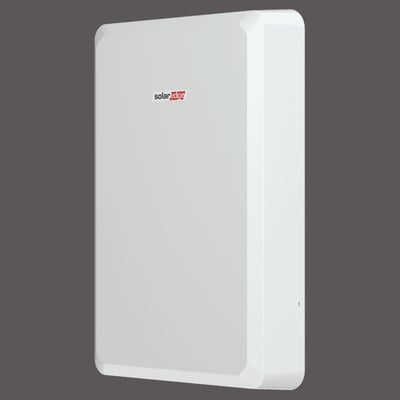 5. SolarEdge BAT-10K: A DC-coupled battery for SolarEdge inverter systems
The SolarEdge BAT-10K offers 9.7 kWh of usable capacity with 94.5% round-trip efficiency. It is DC-coupled, designed to pair with SolarEdge hybrid inverters for homes already using SolarEdge optimizers and inverter equipment.
The tight integration can improve overall system efficiency when the entire string runs through SolarEdge hardware. SolarEdge provides a 10-year warranty with autonomous backup capabilities and energy management through the mySolarEdge app.
SolarEdge BAT-10K features
- DC-coupled design: Connects directly to SolarEdge hybrid inverters, minimizing conversion losses
- 94.5% round-trip efficiency: Retains more stored energy compared to lower-efficiency AC-coupled alternatives
- Autonomous backup: Detects outages and switches to battery power without manual intervention
SolarEdge BAT-10K pros and cons
Pros:
- High round-trip efficiency preserves more of each kilowatt-hour generated by rooftop panels
- Unified monitoring through the mySolarEdge platform covers panels, inverter, and battery
- DC coupling reduces equipment count on new SolarEdge installations
Cons:
- Only compatible with SolarEdge hybrid inverters, limiting flexibility for mixed-brand system designs
- 9.7 kWh capacity is on the smaller side for whole-home backup without additional units
- 10-year warranty is shorter than the 15-year coverage available from several alternatives
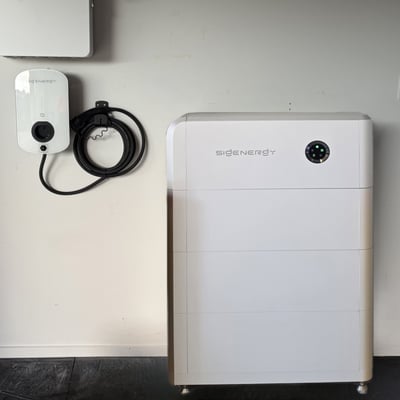 6. Sigenergy SigenStor BAT: A compact unit with high efficiency for tight spaces
The Sigenergy SigenStor BAT delivers 8.8 kWh per module with a 98% round-trip efficiency rating, the highest on this list. It supports both AC and DC coupling, giving installers architectural flexibility. The modular design allows capacity to be scaled over time.
Sigenergy (previously operating under the PointGuard brand in the U.S.) offers a 10-year warranty. The system is compact, which makes it a candidate for installations where wall space is limited.
Sigenergy SigenStor BAT features
- 98% round-trip efficiency: Minimal energy loss during charge and discharge cycles
- AC/DC coupling support: Works with both new and retrofit solar installations
- Compact form factor: Fits in tighter installation spaces compared to larger-format alternatives
Sigenergy SigenStor BAT pros and cons
Pros:
- Highest round-trip efficiency on this list at 98%, preserving more stored solar energy
- Flexible coupling options accommodate a variety of inverter brands and architectures
- Modular design allows homeowners to add capacity as their energy needs evolve
Cons:
- Relatively newer to the U.S. residential market, so long-term performance data is limited
- 8.8 kWh per module means multiple units are required for whole-home backup
- 10-year warranty with a capacity guarantee that may not match longer-term offerings
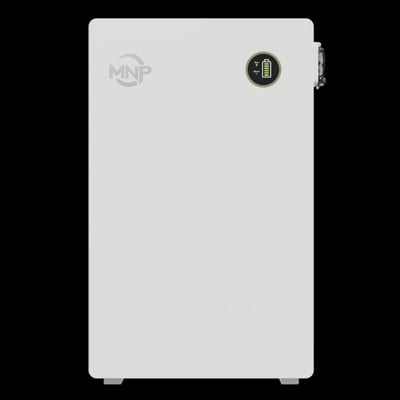 7. MidNite Solar Powerflo 16: A large-format battery for high-consumption homes
The MidNite Solar Powerflo 16 provides 16 kWh of usable capacity in a single unit, the largest single-battery capacity on this list. It is AC-coupled with a 97.5% round-trip efficiency rating. MidNite Solar offers a 15-year warranty.
For suburban homes with above-average energy consumption, the Powerflo 16 reduces the number of individual battery units needed. Its higher capacity per unit can simplify installations where wall space or floor area is constrained.
MidNite Solar Powerflo 16 features
- 16 kWh single-unit capacity: Provides substantial storage without needing to stack multiple modules
- 97.5% round-trip efficiency: High efficiency for an AC-coupled battery of this size
- 15-year warranty: Long-term coverage comparable to established brands in the category
MidNite Solar Powerflo 16 pros and cons
Pros:
- Largest single-unit capacity on this list at 16 kWh, reducing the total number of components
- 15-year warranty provides long-term assurance for homeowners and installers
- High round-trip efficiency of 97.5% minimizes stored energy loss
Cons:
- MidNite Solar is a newer entrant in home batteries, so the installer support network is still growing
- Lower continuous and peak power output compared to higher-power alternatives on this list
- AC-only coupling limits integration options for DC-direct solar architectures
Comparison table: Residential solar battery systems for rooftop solar homes
|
Battery System |
Wire-Free Install |
Warranty Length |
Max Scalable Capacity |
|
Briggs & Stratton SimpliPHI® 6.6 |
✓ |
15 years |
119.7 kWh |
|
Tesla Powerwall 3 |
✗ |
10 years |
40.5 kWh (3 units) |
|
FranklinWH aPower 2 |
✗ |
15 years |
225 kWh |
|
Enphase IQ Battery 5P |
✗ |
15 years |
40 kWh (8 units) |
|
SolarEdge BAT-10K |
✗ |
10 years |
29.1 kWh (3 units) |
|
Sigenergy SigenStor BAT |
✗ |
10 years |
35.2 kWh (4 modules) |
|
MidNite Solar Powerflo 16 |
✗ |
15 years |
16 kWh (single unit) |
How does LFP battery chemistry affect rooftop solar storage performance?
Lithium Ferro Phosphate (LFP) chemistry has become the standard for residential solar battery storage because of its thermal stability, long cycle life, and reduced risk of overheating compared to older chemistries. For suburban rooftop installations, that stability matters in environments where batteries are mounted outdoors on a garage wall or in a utility closet that experiences temperature swings.
LFP cells deliver thousands of charge-discharge cycles before degrading to their warranty floor, which means a homeowner who cycles their battery daily for solar self-consumption can expect years of consistent performance. According to SEIA's Energy Storage Market Outlook Q3 2026, residential battery storage deployment saw a 51% capacity increase in 2025, driven in large part by the adoption of LFP-based systems.
For installers, LFP chemistry also simplifies storage and handling on the job site. These batteries do not require the same temperature-controlled storage as NMC alternatives, and their lower fire propagation risk aligns with building codes in most suburban jurisdictions.
What should solar integrators evaluate when sizing a battery for suburban homes?
Sizing a home energy storage system correctly starts with understanding the homeowner's load profile, not just their solar array size. A rooftop system generating 8 kW may only need 13 to 20 kWh of storage if the goal is overnight self-consumption, but a homeowner who wants whole-home backup during a multi-day outage may need 40 kWh or more.
Key factors to evaluate include the home's critical load panel, the number of high-draw appliances (air conditioning compressors, well pumps, EV chargers), and the local utility's net metering or time-of-use rate structure. A home on an aggressive TOU schedule benefits more from a battery that can discharge during peak hours and recharge from solar during off-peak periods.
Scalability is equally important. Briggs & Stratton Energy Solutions designed the SimpliPHI 6.6 to let you start with a single 6.65 kWh unit and scale to 119.7 kWh as the homeowner's energy needs evolve. That modularity protects both the homeowner's investment and your reputation as the installer who right-sized the system from the beginning.
Why Briggs & Stratton SimpliPHI® 6.6 is the top residential solar battery for installers
The difference between a battery you install once and a battery you build a business around comes down to three things: speed of installation, reliability of the manufacturer, and confidence that the product performs over its full warranty period. Briggs & Stratton Energy Solutions delivers on all three with the SimpliPHI 6.6.
The RapidStak™ wire-free connector is not just a convenience feature. It is a structural advantage for solar integrators who measure profitability in completed projects per week. By eliminating wiring between battery modules, Briggs & Stratton Energy Solutions reduces installation errors and shortens commissioning time, which directly impacts your bottom line.
Scalability from 6.65 kWh to 119.7 kWh means a single product line covers the suburban starter home and the high-consumption estate. And with compatibility across EG4, Sol-Ark, Solis, Growatt, and Megarevo inverters, you are not locked into a single equipment ecosystem. That flexibility, combined with EnergyTrak™ remote monitoring and U.S.-based technical support, gives you a complete platform for residential solar battery storage projects.
Ready to see how the SimpliPHI 6.6 fits your next rooftop solar project? Find an installer or explore the dealer and installer program to get started.
FAQs about residential solar battery storage
What is the right battery capacity for a typical suburban home with rooftop solar?
Most suburban homes with rooftop solar benefit from 10 to 20 kWh of battery storage for overnight self-consumption. Briggs & Stratton Energy Solutions offers the SimpliPHI 6.6, which starts at 6.65 kWh per unit and scales to 19.95 kWh in a single three-battery stack, letting you match capacity to the home's actual usage patterns.
Can I add battery storage to an existing rooftop solar system?
Yes. AC-coupled batteries like the Briggs & Stratton SimpliPHI 6.6 connect to your home's electrical panel alongside your existing solar inverter. This retrofit approach avoids replacing your current equipment while adding backup power and energy storage capabilities.
How does LFP battery chemistry compare to NMC for home solar storage?
LFP (Lithium Ferro Phosphate) batteries provide greater thermal stability and longer cycle life than NMC alternatives. Briggs & Stratton Energy Solutions uses LFP chemistry across its SimpliPHI product line, and the batteries carry UL 9540A fire safety testing certification for verified safety in residential settings.
What role does a battery warranty play in choosing a solar storage system?
A battery warranty protects your investment over the system's expected lifespan. The SimpliPHI 6.6 from Briggs & Stratton Energy Solutions includes a 15-year warranty, one of the longest in the category. Warranty terms should specify coverage for parts, capacity retention, and the manufacturer's commitment to long-term support.
Do solar batteries work during a grid outage?
Batteries with backup functionality detect a grid outage and automatically switch your home to stored power. The SimpliPHI 6.6 paired with a compatible inverter provides this capability, keeping essential loads running until the grid is restored or the battery recharges from your solar array.
How long does it take to install a residential solar battery system?
Installation time varies by system complexity. The Briggs & Stratton SimpliPHI 6.6 features RapidStak™ wire-free connectors that allow a three-battery stack to be assembled in under five minutes. Combined with the IP65 outdoor rating and flexible mounting options, total installation time is shorter than systems requiring individual battery wiring.