California Battery Storage Tax Incentives & Rebates for Residential & Non-Residential Customers
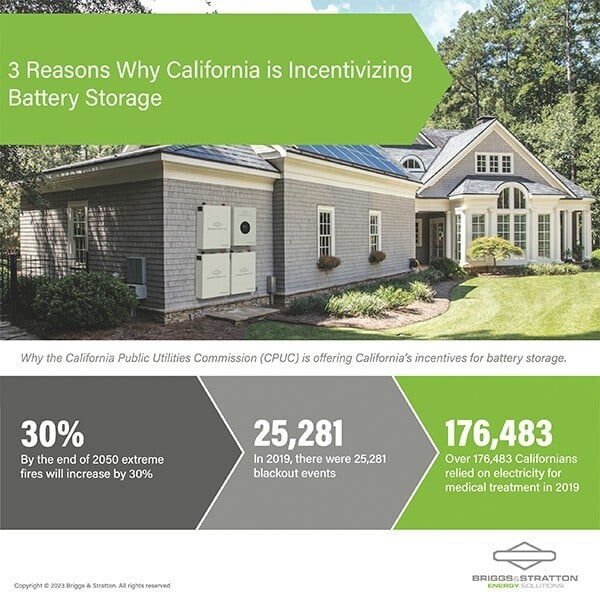
Recent shifts in net metering by the California Public Utilities Commission (CPUC) have signaled a transition from focusing on incentivizing net metering rates to incentivizing battery storage installations in the state. These deep incentives are aimed at rapidly increasing battery storage adoption for both residential and non-residential utility customers. The incentives are geared toward areas where extreme fire and blackouts occur more often, as well as for those reliant on medical equipment. The statistics below highlight some of the reasons the CPUC is encouraging battery storage installation:
-
By 2050, extreme fires in the Golden State are expected to skyrocket by 30%. (UNEP)
-
25,281 blackout events occurred in 2019, and more events continue to happen. (Power Outage USA)
-
176,483 people in California relied on electricity for essential medical equipment to run in 2019. (RAND)
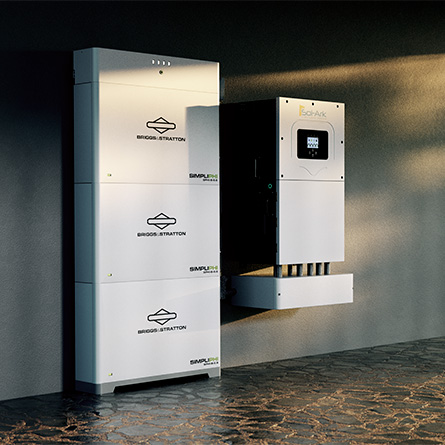
Battery storage systems are revolutionizing the way we approach power, offering a more localized solution to keeping the power on. This reduces our reliance on overburdened power transmission lines. In California, where fires and grid stresses have led to more frequent rolling blackouts, these backup systems have become essential. With battery storage, you can keep the lights on even when the wider grid goes dark.
Medically vulnerable people are most susceptible to power shortages, becoming the first in line to require backup power, according to CEG (Clean Energy Group). Battery storage systems provide resilience by delivering continuous power to medical devices during power outages.
Battery storage is also a key component for supporting renewable energy efforts, according to a plan update from California Governor Gavin Newsom. The plan outlines California's initiative to achieve 100% decarbonization by 2045. SGIP provides rebates to support these efforts with battery storage installations for residential and commercial systems to meet the demands of these particular challenges.