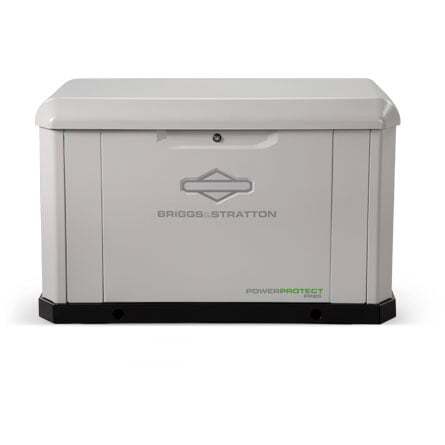
Whether through a natural disaster or local incident, you have suddenly found yourself without power. It could be hours or days before electricity is restored. This could mean the loss of warmth or cooling, spoiled food, stagnant productivity, or just general discomfort. It’s moments like these when having a standby home generator is incredibly important.
While traditional electricity flows through high-voltage power lines to be distributed throughout your neighborhood, generators themselves do not rely on distributed power from the grid — they replace it. When your utility power is shut off, transfer switches kick on the generator and it takes over to power your home.
This is possible because the generator uses a fuel source (i.e. natural gas or liquid propane) to create electrical energy by driving an electromagnetic armature. Similar to how a dam uses the power of water and converts it into electricity, the generator uses fuel to power a motor and converts it into electricity to power your homes’ needs. Just like with any electrical power source, when working with generators, there are several important safety tips to keep in mind.