Quick Overview: Home Standby Generator Maintenance Quick Guide
Proper standby generator maintenance combines automated weekly system exercises with monthly inspection habits and annual dealer tune-ups. Modern home standby generators run weekly low-speed tests to verify battery health and oil circulation. Homeowners should perform monthly visual checks and replace oil, air filters and spark plugs annually. Certified dealers must perform annual valve lash adjustments, firmware updates and load bank testing to guarantee operational readiness during grid failure.
Power grid interruptions disrupt daily life, but proactive system care gives your family complete energy independence and security. As your partner in home energy resilience, Briggs & Stratton Energy Solutions provides the expert guidance you need to keep your generator performing flawlessly at a moment's notice.
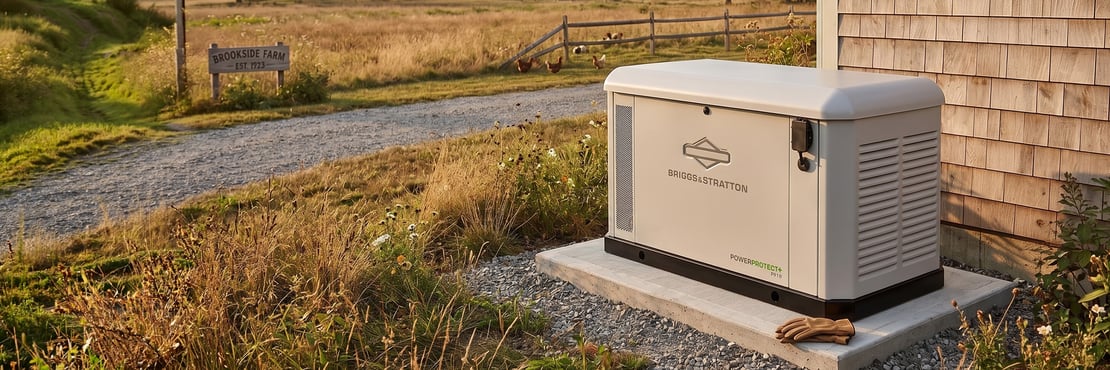
The Weekly Self-Test Habit
Most home standby generators automatically run a short weekly exercise cycle to circulate engine lubricant, maintain battery charge and test control logic.
- Listen: Become familiar with the baseline sound of a normal test cycle. Sputtering, grinding or rattling noises serve as early warning signs requiring inspection.
- Look: Check the status LED indicator on the generator enclosure. A solid LED—currently blue on modern models—confirms system readiness and that you are good to go. If the LED is off, flashing, or showing red, the system has encountered a problem or active diagnostic fault code. Note: transfer switch enclosures generally only feature a status LED if fitted with a surge protector
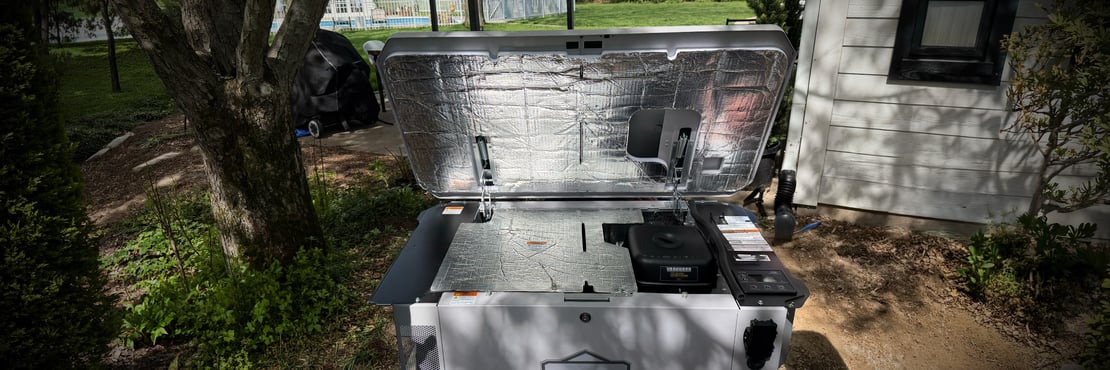
Essential Homeowner Maintenance Schedule
|
Interval |
Task |
Action & Purpose |
|
Monthly |
Visual Inspection |
Clear leaves and debris from enclosure vents; check for oil or coolant leaks. |
|
Battery Check |
Inspect terminals for corrosion and verify output; weak batteries cause most starting failures. |
|
|
6 Months |
Air Filter Check |
Inspect paper filter media against light; replace if dark or obstructed to maintain engine airflow. |
|
Engine Oil Level |
Verify dipstick level when cold; top off with recommended full synthetic oil. |
|
|
Power Outage Simulation & Component Inspection |
Simulate a power outage to test real-world switchover performance, and inspect wiring and internal components for wear, corrosion, or loose connections during this semi-annual service. |
|
|
Annually |
Oil & Filter Change |
Replace engine oil and filter annually or every 100 hours for air-cooled models, whichever comes first (liquid-cooled maintenance intervals vary by engine model). Note that initial break-in oil changes are no longer required. |
|
Component Renewal |
Install new spark plugs, replace air filters, inspect fuel line connections for damage, clean the oil cooler assembly, and check valve lash. |
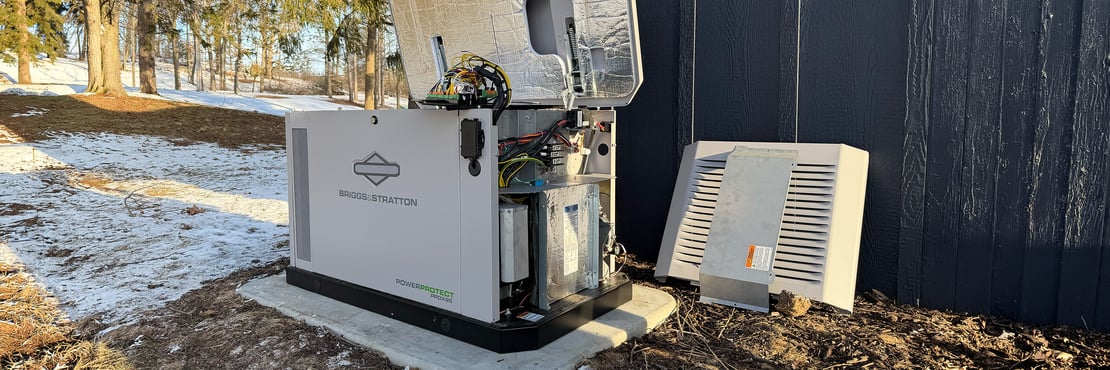
Why Annual Professional Service Is Critical
While routine homeowner checks protect basic operation, an annual inspection by a certified Briggs & Stratton dealer preserves system integrity. Qualified technicians use professional diagnostic tools to perform critical technical services:
- Valve Lash Adjustment: Realigns engine valves to precise factory tolerances, maintaining output power and preventing internal mechanical wear.
- Load Testing: Simulates a total utility outage by running the generator under maximum home power demand, exposing hidden electrical issues before severe weather strikes.
- Firmware Updates: Flashes controller software with the latest operational logic for superior diagnostic accuracy and system integration.
Take control of your home's backup power strategy. Contact a local certified Briggs & Stratton dealer today to schedule an annual service or request a free consultation.
Frequently Asked Questions
How often should standby generator oil be changed during an extended outage?
During continuous operation, check the dipstick daily. For air-cooled standby generators, change the engine oil and filter every 100 runtime hours or annually, whichever comes first (50-hour intervals apply to portable generators, while liquid-cooled standby generator intervals vary depending on the engine).
What is the main reason a home standby generator fails to start?
A depleted or corroded 12-volt battery is the leading cause of starting failure. Inspecting battery terminals monthly and replacing the battery every two to three years prevents starting faults.
Can I perform my own generator maintenance without voiding the warranty?
Homeowners can safely replace air filters, spark plugs and engine oil. However, complex controller diagnostics, valve lash adjustments and warranty repairs must be completed by a certified technician.
What does a yellow fault light on a standby generator mean?
A yellow status light indicates a non-critical maintenance reminder or minor condition. A red light indicates an operational fault that prevents starting. Refer to your owner's manual or contact a dealer to clear diagnostic codes.