Portable vs. Standby Generators
Generators are receiving unprecedented attention as extreme weather events increase, grid stability wavers and outages last longer than ever before. In fact, The Wall Street Journal recently reported that the average utility customer experienced just over eight hours of power interruptions in 2020 — more than double the time in 2013. These lengthier outages are causing more homeowners to consider purchasing a generator for added peace of mind when the power goes out. But the first question many customers will ask themselves in their buying journey is, “Should I get a portable or standby generator?” While both types of generators have their pros and cons, we’ve compiled some details to help you better understand which option is best for you.
The basics
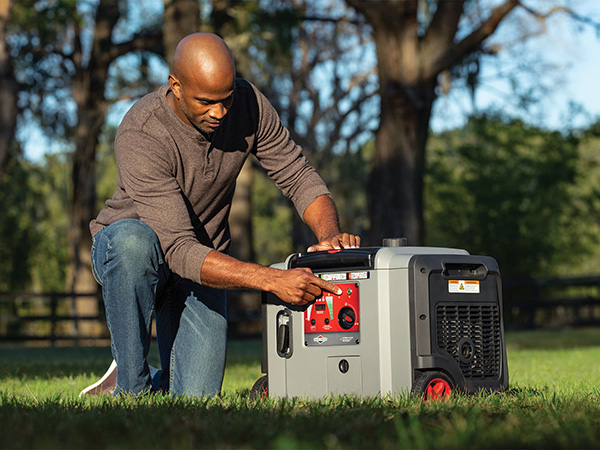
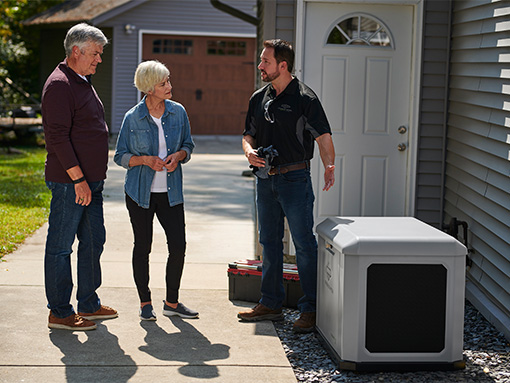
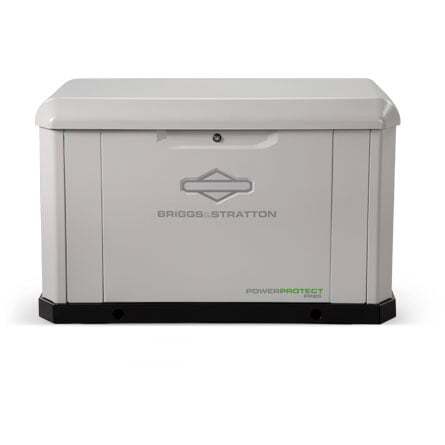
The first factor to consider when comparing portable and standby generators is how the generators are set up. A standby generator is permanently installed and connected to your home. This generator requires no extra work after the initial installation by a licensed electrician and will automatically turn on in the event of a power outage. Portable generators are smaller units that are moved outside when backup power is needed — away from any windows, doors, vents and other openings to prevent carbon monoxide exposure. Portable generators need to be placed at least 20 feet from any home or structure and then filled with gasoline in order to run. Heavy-duty, outdoor-rated extension cords are needed to connect the generator to the transfer switch.
A power outage is usually an unexpected event, so people shopping for a generator may want to consider the convenience a standby generator offers. Standby generators switch the power over automatically without any action from the homeowner, making it a seamless and quick experience. It takes between 10 and 20 seconds for the power supply to switch from the utility line to the generator. More action is required from the homeowner for portable generators.
Setting up a portable generator could take anywhere from 10 to 20 minutes or longer depending on the circumstances. The portable generator will need to be brought out of storage and placed the appropriate distance away from the home or other structure. Bulky cords need to be plugged into the generator and run to the transfer switch, which is connected to the appropriate home or structure circuits, and it needs to be filled with gasoline. Fuel levels need to be closely monitored as the generator is running.
Safety callouts
As with any product you are integrating into your home, there are some safety considerations to be aware of with both types of generators.
If purchasing a standby generator, discuss safety with your installation technician. The standby unit needs to be set up at least five feet away from the home (unless the home has one-hour fire rated walls or the generator has been fire tested) and any windows, doors, vents or other openings, to prevent any harmful exposure to carbon monoxide emissions. Although standby generators have an enclosure, care should be taken to clear the areas of leaves and debris to ensure it is operating at its peak capacity.
Any repairs to the standby generator should be done by a qualified installer. While uncommon, there can be a risk of overloading your home’s circuit breaker or the unit leaking gas if the generator is not installed or repaired as outlined by the manufacturer.
Unlike a standby generator, a portable generator must be set up by a user each time it is needed. This can lead to a higher risk of the portable generator being used incorrectly and, in turn, unsafely. Carbon monoxide emissions are the most pressing safety concern when it comes to portable generators. It is crucial to place portable generators outside and as far away from the home or building as possible to minimize carbon monoxide exposure. Portable generators are not typically waterproof, meaning they cannot be used effectively during a storm, which is the number one cause for power outages.
Maintenance
It is recommended that a professional technician perform maintenance and repairs on your standby generator. The generator performs a monthly check on its own, but may need to be serviced by a technician at least once a year to remain in optimal condition. The dealer who installs a standby generator will often offer annual service packages to keep the unit operating at its best.
Portable generators need to be tested at least once a year to make sure they are in working order, but it’s best to test them every couple months. It’s important to store the generator with no fuel if it is not used often. You can also use treated fuel to avoid clogging up the fuel system. Users should check their carburetor, air filter, fuel filter and spark plug regularly, as well.